Cats
Gen X Women
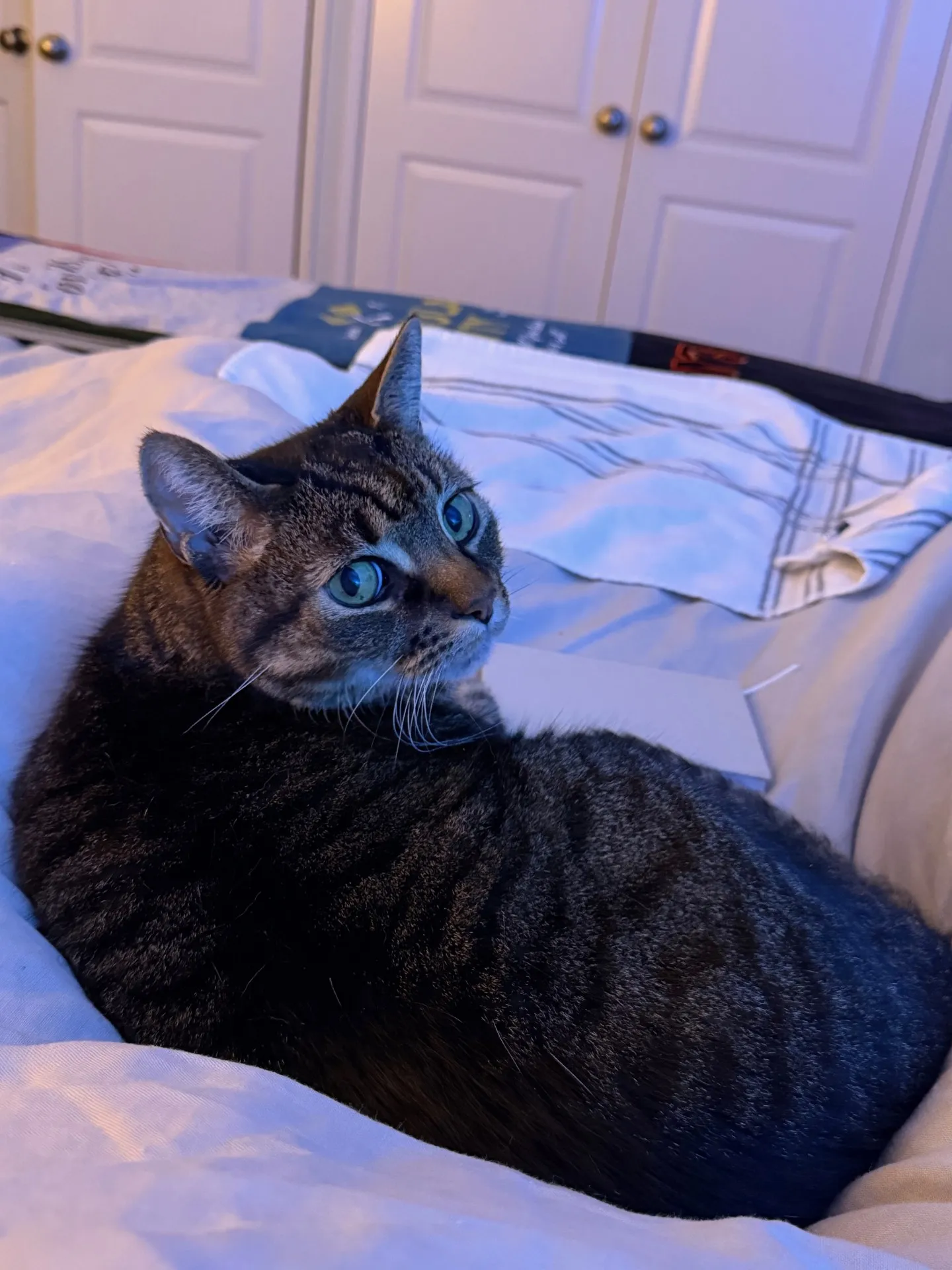
This is what I see every night shortly before falling asleep. Benedict Cumbercat sitting next to me. Watching me like he is quietly clocking my nervous system.
He is not asleep. He is not needy and he is not asking for anything. He is just there.
And the longer I live with cats, the more convinced I become of something socially incorrect but emotionally accurate:
“Crazy Cat Ladies” are actually the most regulated people in the room.
I should probably admit something upfront
I didn’t come to cats late in life.
I grew up with them.
Manx cats, specifically.
Cats with no tails.
In my family, that wasn’t quirky, it was identity.
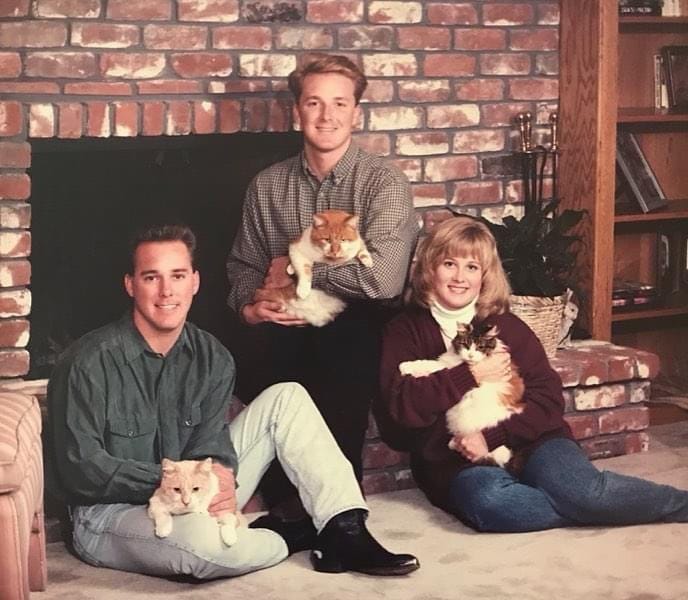
Manx cats were just what we did. Here is a photo from 1992 of me with my two brothers sitting around a fireplace, each of us holding a cat like it’s the most normal thing in the world.
Looking at it now, it’s slightly unhinged. It’s also completely sincere.
What those cats taught me early, without anyone ever saying it out loud was this:
Why be normal?
Different wasn’t broken.
Different was just… ours.
We had a beautiful calico Manx, Eldar, my mother brought home when I was 12.
Yes, Mom was obsessed with The Lord of the Rings in 1978.
Eldar lived until I was 30. We kept two of her sons Wazzu (Because 4 generations of family attended Washington State University), and Quasimoto. He had a slight hunchback and had a stumpy tail.
Years of quiet companionship while coming of age, routine, and presence. Long before anyone talked about “nervous systems,” I was learning what safety felt like.
GenX women were raised to power through everything
We were taught to:
Be independent
Don’t complain
Figure it out
Keep moving
Everyone’s tired
We learned how to function with dysregulated nervous systems and polite smiles. We got very good at managing chaos.
I spent the 1990’s early 2000’s building a career and for more than a decade had no cats.
But the Cat Distribution System (More on that in Part 2) came back around because they just know.
Tripod found me in 2011
I didn’t choose him, he arrived.
At a moment when I was outwardly capable and inwardly exhausted, Tripod showed up, imperfect, observant, grounding. He didn’t demand more than I could give. But he required me to slow down enough to notice how I was living. His story here:
Benedict Cumbercat came later, in 2014 when the show Sherlock was at its peak and I was looking for a new actor to obsess over.
Miami Vice and Don Johnson needed to be replaced.
Benedict came not as a rescue moment but as confirmation.
By then, my nervous system already understood the assignment.
Cats do not reward hustle
Cats don’t care about your résumé.
They are unimpressed by urgency.
They do not respond to over-explaining.
Cats respond to state, not story.
You can tell a cat all about your stress. Nothing happens.
But if your breathing slows?
If your shoulders drop?
If the room quiets?
They appear. They settle. They nap near you.
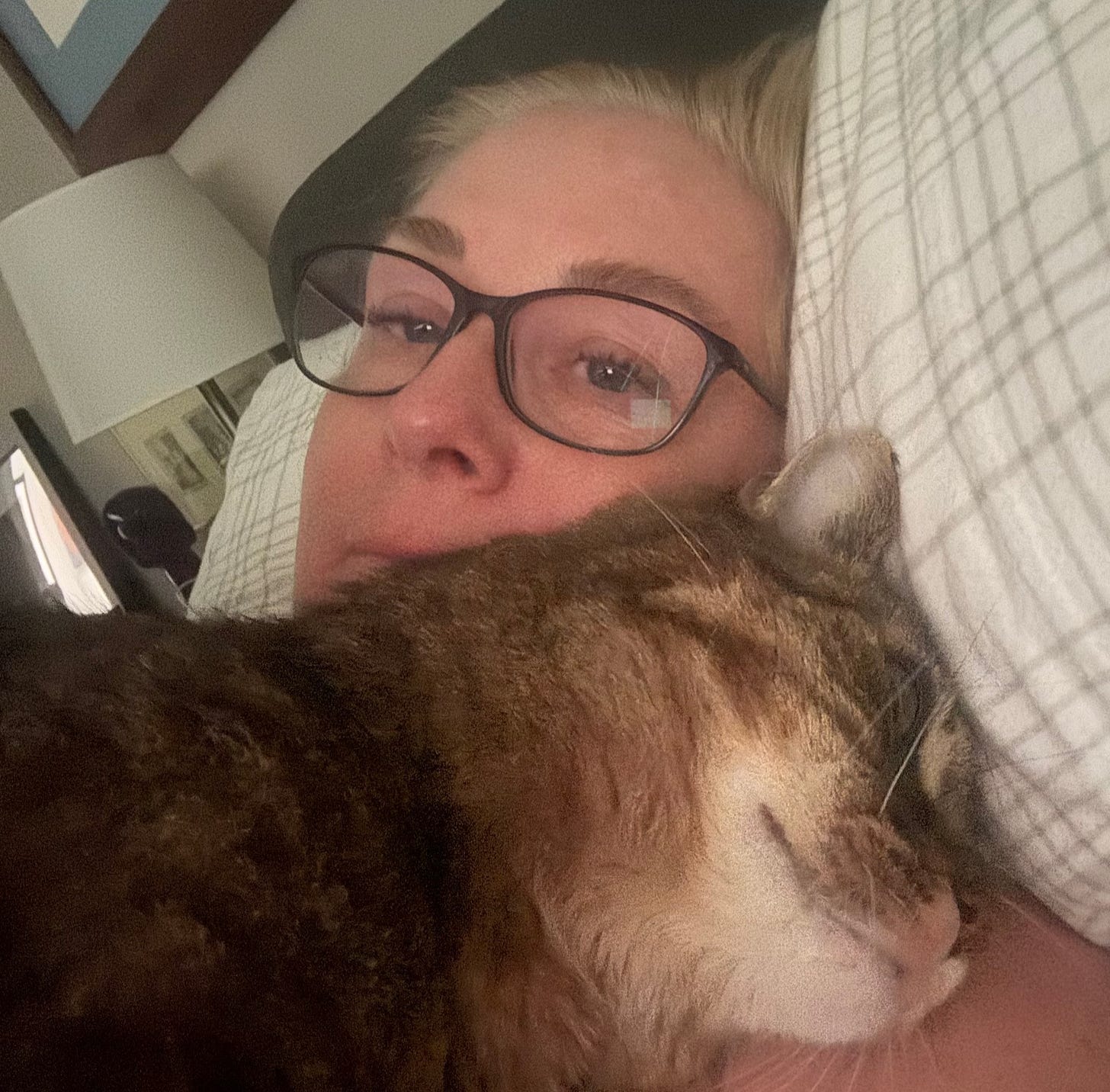
At some point I realized I had outsourced my weighted blanket to a living creature.
For your weighted blanket needs, I recommend: CAT.
Living with a cat is nervous-system retraining
Cats are experts in regulation:
They rest when tired
They leave when overstimulated
They accept affection without obligation
They decline touch without apology
They don’t self-improve.
They self-regulate.
To live peacefully with a cat, you have to stop forcing connection. You have to slow down. You have to respect boundaries, including your own.
That’s not indulgent.
That’s advanced.
The stereotype gets it backward
The “Crazy Cat Lady” trope suggests loneliness, oddness, even failure.
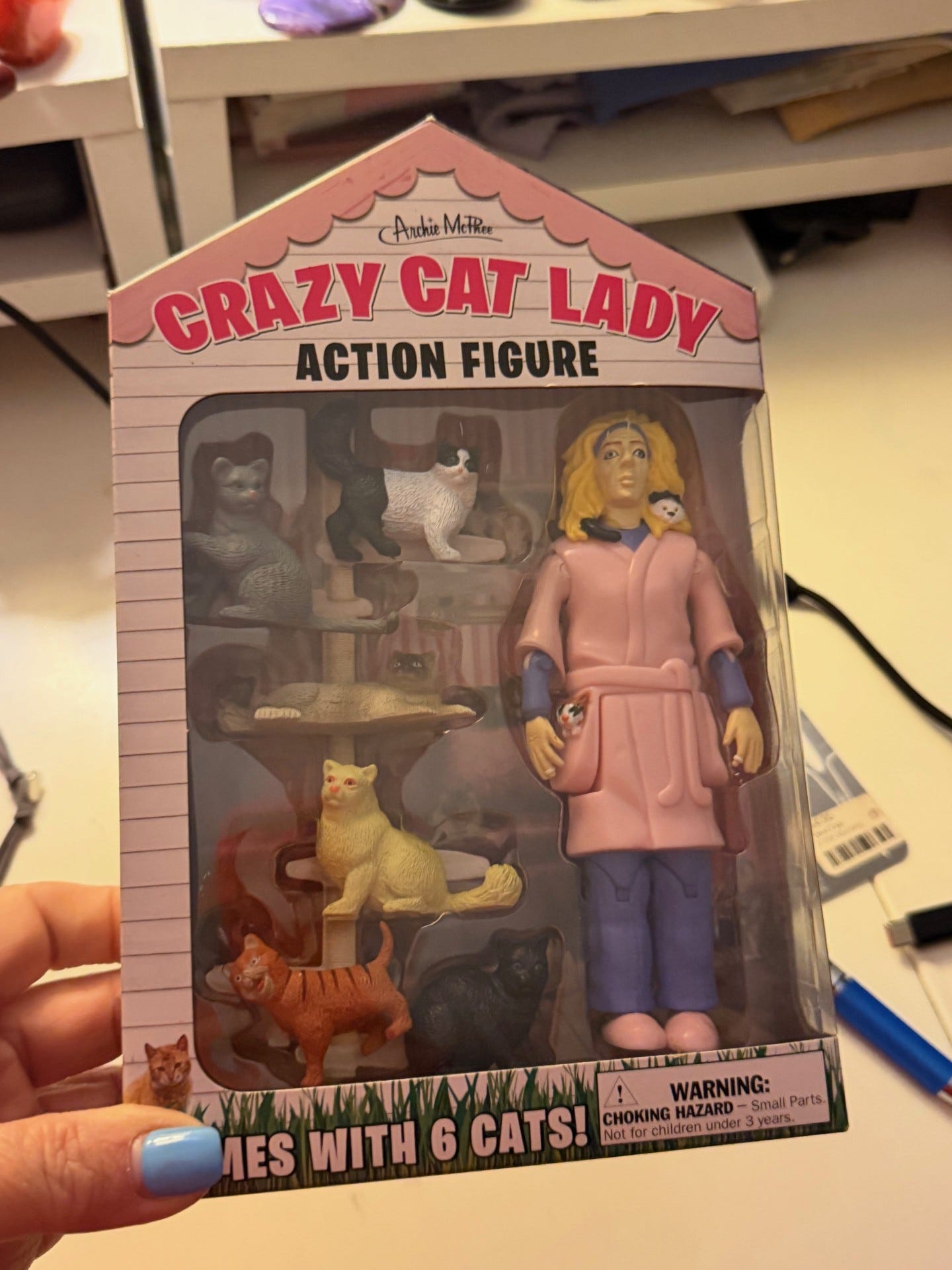
But it really is the opposite.
Women who choose cats, or are chosen by them, are women who:
Are done performing
Are comfortable with silence
Understand consent
Prefer honest connection to constant reassurance
Cats don’t need you cheerful.
They need you real.
A regulated life looks quiet
A woman sitting with a cat isn’t missing out.
She’s opting out of nervous-system chaos.
She’s choosing presence over urgency.
Attunement over noise.
Rest over spectacle.
That’s not withdrawal.
That’s sanity.
My cat is asleep next to me as I write this.
His back is still turned.
And growing up with Manx cats taught me exactly what that means:
You’re safe.
You belong.
You don’t have to be normal.
In cat language, that’s a five-star review.
Blogs and Insights