sports
about me
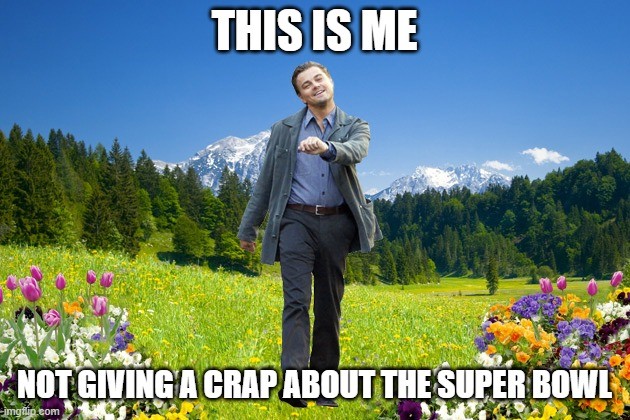
The Super Bowl is back in the Bay Area, but football lost me somewhere between the velvet ropes, the parking lot chaos, and the cost to its players.
This week, the Super Bowl returns to the Bay Area, a place that shaped many of my earliest memories of sport, identity, and community.
And yet, I’m not watching.
I won’t be glued to the screen. I won’t be swept up in the spectacle. Instead, I’ve been reflecting on why I walked away from the NFL. Not because the game lost its drama, but because the culture around it changed in ways that matter deeply.
My story with sports didn’t begin with football.
It began with baseball.
My Youth Was the Oakland Coliseum, Not the NFL
I never attended an NFL game as a kid. There was simply no way my parents were going to take three small children into the chaos of a Raiders crowd, and Candlestick Park felt impossibly far away.
My youth belonged to the Oakland Coliseum, but for baseball.
I grew up watching World Series champions like Reggie Jackson, Sal Bando, Joe Rudi, and Gene Tenace. The players felt accessible in a way professional athletes rarely do now. You could talk to them, get autographs, feel part of something.
That’s where my love of sports began.
And then, in 1977, my twelve-year-old heart took its first real sports betrayal. Reggie Jackson was traded to the New York Yankees, and Charlie Finley sold us out.
It left a hole only sports can make.
The Seahawks Were My Football Team and I Never Switched
I became a Seahawks fan when they entered the league in 1976. I had family in Washington, and I loved players like Jim Zorn and Steve Largent.
I never liked the Raiders. I never liked the roughness or the rowdiness that always seemed to surround them and their fans.
And the 49ers? In the 1970s they were, frankly, a pretty crappy team. That changed with Joe Montana and Jerry Rice, but by then I was already firmly entrenched in my Seahawks loyalty.
I never switched
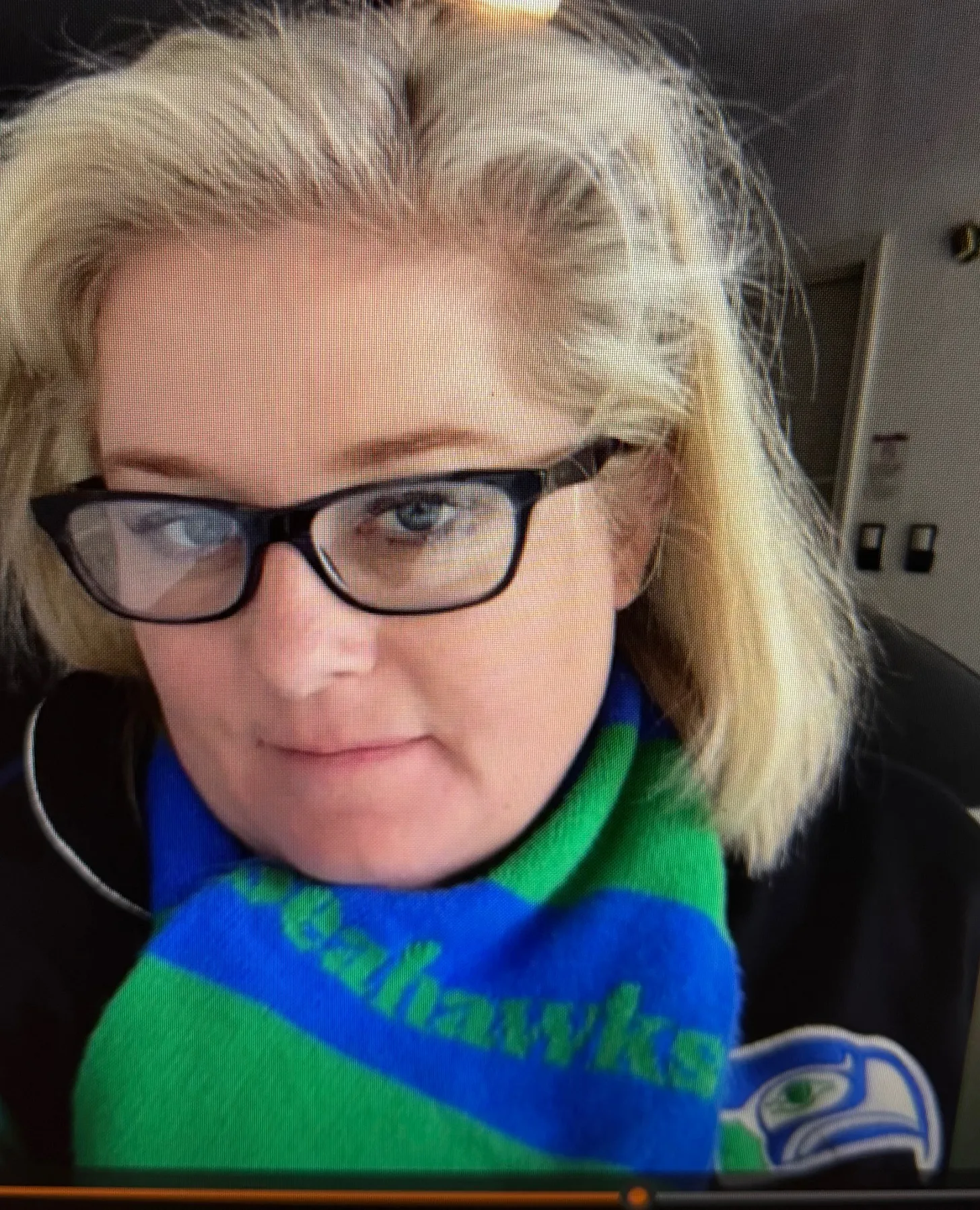
Me at a 2014 Super Bowl party, still a Seahawks fan, before I began stepping away from the NFL.
College, Press Passes, and Giants Magic
In the early 1990s, I was sports editor of my college newspaper.
My colleagues and I took full advantage of press passes. We went to A’s games and Giants games. Access that felt thrilling and surreal.
I technically had locker room access, but the one time I stepped inside, I stepped right back out. Journalists do not need to see players’ toes or private parts any more than fans do.
It was during this time that my heart went to the San Francisco Giants, where it still is today.
I spent many afternoons in the left field bleachers, rowdy but joyful. I watched the Bonds era. Later, I hosted clients from luxury suites.
And then came October 2010.
Game 2 of the 2010 NLCS: Baseball Still Knows How to Be Magic
I was sitting in Section 123 on the third base line during Game 2 of the 2010 National League Championship Series against Philadelphia, that magical run toward the Giants’ first World Series title in San Francisco.
During the seventh inning stretch, they played Don’t Stop Believin’.
Journey was the soundtrack of my youth. Steve Perry and Neal Schon were, and are, mortal gods to me.
I turned around, and there he was.
Steve Perry, in a suite directly above me, singing along with his own song.
I started blubbering like a teenager.
That moment was why I love baseball. Raw, human, communal. Even in a stadium full of thousands, it felt intimate.
Sports at their best are shared joy.
The NFL Experience Became Something Else Entirely
The last NFL game I attended was in San Francisco around 2011.
A colleague and I had seats near the forty-yard line, about fifteen rows up. Expensive enough that I expected a civilized experience.
I could not have been more wrong.
The parking lot was full of heavily intoxicated tailgaters at ten in the morning.
The vibe wasn’t celebratory. It felt volatile. Honestly, I felt uneasy.
That wasn’t community.
That was something darker.
Years earlier, when I was in San Francisco for meetings while working for Governor Gray Davis, I decided to attend a Seahawks versus Raiders game in Oakland.
In the elevator, the Governor and his wife Sharon questioned my judgment about walking into the stadium alone in Seahawks gear.
They were right.
I was yelled at.
I was spat on.
That wasn’t rivalry.
That was tribal hostility.
Football Behind the Velvet Rope
In The Velvet Rope Economy, Joseph Pine and James Gilmore describe how modern life becomes segmented by manufactured exclusivity. Access and status behind velvet ropes.
That’s what the NFL feels like now.
Sky high ticket prices. Premium experiences that don’t actually feel safe. Fans sold belonging through consumption.
Modern NFL fandom increasingly resembles buying a luxury purse you can’t afford, not for craftsmanship, but for the signal.
The game became less about community and more about status, spectacle, and separation.
And Then There’s the Cost to the Players
My discomfort with the NFL grew beyond fan experience.
It’s also about what the league has asked, and taken, from the people on the field.
We now know that repeated head trauma can lead to chronic traumatic encephalopathy, CTE, a degenerative brain disease linked with memory loss, depression, aggression, cognitive decline, and suicide.
The most tragic example will always be Junior Seau, who died by suicide in 2012. His brain later showed clear signs of CTE.
I remember watching a 60 Minutes investigation years ago, when the conversation about brain injury in football finally broke into mainstream America. When the public could no longer pretend concussions were just getting your bell rung.
Former players struggling to remember their children’s names.
Men in their forties trapped in fog.
Depression setting in.
Rage appearing out of nowhere.
These were not old men.
These were athletes who should have had decades of life ahead of them.
The NFL has made changes, but always after pressure. After lawsuits. After denial became impossible.
The league agreed to a multi-billion dollar concussion settlement. The NFL Players Association has pushed for better protocols, long term care, and accountability.
And still, the truth remains.
The business model does not work without the collisions.
Without the violence, there is no product.
So the machine keeps moving.
Cheered in their twenties.
Forgotten in their forties.
That’s Why I Stopped Watching
I didn’t stop watching because football stopped being exciting.
I stopped because I stopped believing the league deserved my attention.
Because once you understand the cost, socially, emotionally, morally, the spectacle stops being fun.
The Super Bowl may be back in the Bay Area.
But I won’t be watching.
Because a society is judged not by what it celebrates, but by what it is willing to sacrifice for entertainment.
Blogs and Insights